
Concordat Watch - Concordats by country -
Peru
The gold and silver of the Incas made Peru the focal point of both the Spanish conquerors and the Catholic Church. In the 16th century the Diocese of Lima held sway over the area from Chile to Nicaragua. Lima was also the seat of one of the three courts of the Inquisition established in Latin America, where its underground torture chamber helped to assure obedience to the Church. The Court of the Inquisition in Lima operated from 1570 until the country won independence in 1821.
Even today the Church wields decisive influence in Peru. The Catholic welfare organisation Caritas is said to have a wider reach than the government programmes and Catholicism is the only religion taught in public schools. The Archbishop of Lima was so intent on keeping the state out of education — including public health education — that in 2013 he condemned the government's bill to try to curb children's consumption of junk food.
Even liberal Catholicism is suspect, as Peru's major Catholic university discovered in 2012 when moves were made to bring it under Vatican control. A canon law suit is proceeding against it in Church courts to strip it of the right to call itself Catholic and Jesuit, unless it adheres more closely to Church doctrine, and it has been announced that action against others will follow.
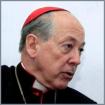
- What does public funding for Catholic universities mean? The Pontifical Catholic University of Peru puts it to the test
Public funding for Catholic universities, as for other Church institutions, is often guaranteed by concordats, as in Hungary (art. 3), Poland (art. 15.3) and Slovakia (art. 4.1). Yet these universities must still obey Canon or Church law. In 2012, with Vatican backing, the Opus dei Cardinal-Archbishop of Lima tried to take over Latin America's only independent Catholic university, the Pontifical Catholic University of Peru.
- The junta's concordat still binds Peru today
The 1980 concordat with the military junta of Peru was hastily ratified just 2 days before the new democratic constitution came into effect. Now the Protestants, in an attempt to get a law which gives them more privileges, have agreed not to criticise the concordat and to permit dropping any mention of a “secular state” in the new legislation.
- Concordat with the military junta (1980): text
This concordat was ratified by the military junta led by General Francisco Morales Bermúdez Cerruti only two days before democratic rule and a new constitution came into effect, which allowed it to violate that and all future constitutions.


